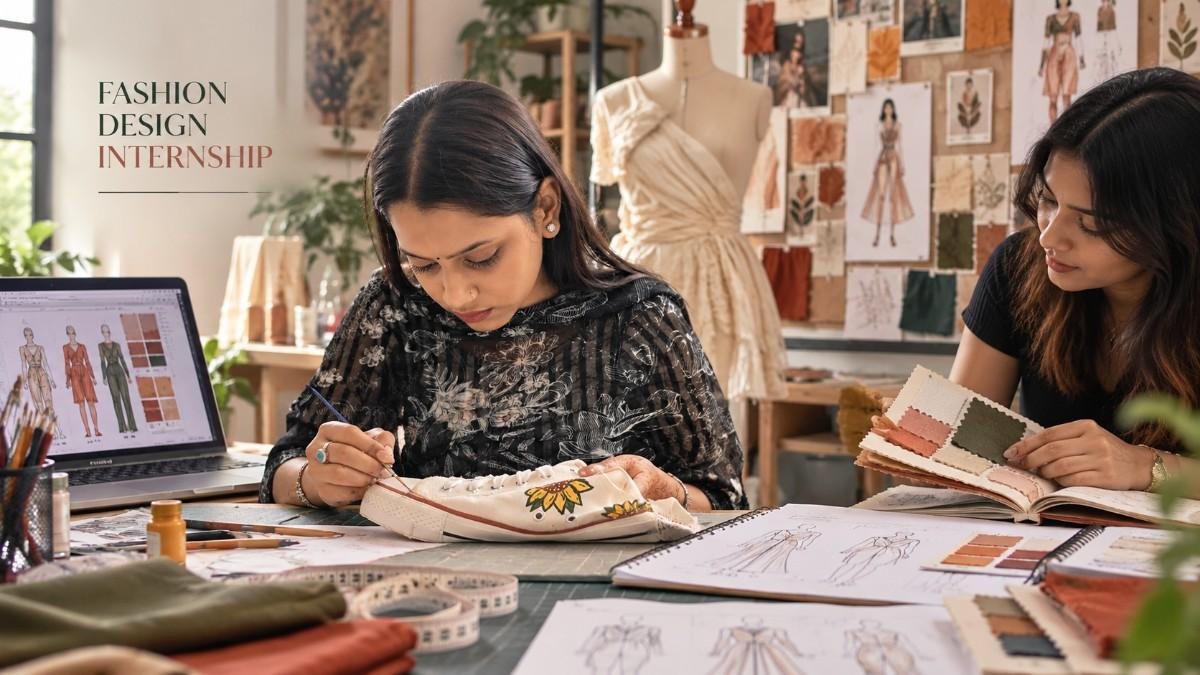
A fashion design internship is one of the most significant steps a student can take toward building a professional career in fashion. It is the transition point between academic training and real industry practice, and it fundamentally changes how a student understands design, production, and professional expectations. Yet most students begin their first internship with limited clarity about what the work actually involves on a day-to-day basis.
Fashion design internship for students typically combines creative support tasks, technical assistance, and operational responsibilities that together give an intern a ground-level view of how the fashion industry actually functions. Understanding what to expect before you begin helps you prepare more effectively, perform more confidently, and extract more value from the experience. For a broader view of where a successful internship fits into your overall career preparation, the fashion design student checklist before graduation guide covers everything you should have in place before entering the job market.
What Work Do Fashion Design Interns Do in a Company?
Fashion designing internship responsibilities vary depending on the type of organisation, the size of the team, and the stage of the design cycle the company is in when you join. What is consistent across most fashion design intern placements is that the work is practical, varied, and directly connected to the production of real clothing collections.
Assisting with fashion research and trend analysis is one of the most common intern tasks. Designers rely on research to stay ahead of market trends, understand what competitors are producing, and identify emerging consumer preferences. As an intern, you may be asked to compile trend reports, research specific colour or material directions, or analyse current collections from particular markets. This work develops your ability to read the industry systematically rather than through personal taste alone.
Creating mood boards and design references is another foundational intern responsibility. Senior designers and creative directors use mood boards to communicate a collection’s direction to the broader team. Interns who can assemble strong, visually coherent reference boards quickly become genuinely useful contributors. Supporting fashion illustrations and technical drawings means working alongside or under the direction of senior designers to produce design sketches, flat technical drawings, and presentation materials for internal review or client presentation.
Helping with fabric selection and sourcing involves visiting fabric suppliers, organising swatches, and maintaining fabric libraries. This hands-on material work builds the textile knowledge that distinguishes experienced designers from those who understand fabric only in the abstract. Assisting with garment samples and fittings means being present when prototype garments are assessed on models or dress forms, taking notes on fit corrections, and communicating changes to the production team. Supporting production coordination and quality checks and organising collection details and design documentation round out the picture of what a fashion design internship for freshers typically involves across its full range of tasks.
What Does a Typical Day Look Like for a Fashion Design Intern?
A typical day for a fashion design intern does not follow a fixed script, but it has a consistent rhythm shaped by where the team is in its design and production calendar. The experience varies significantly depending on whether you are in a pre-production phase, a sampling phase, or approaching a collection deadline.
In the early weeks of a design cycle, intern days are often research-heavy. You might spend the morning compiling trend references and the afternoon organising fabric swatches or preparing mood board materials. As the team moves into active design, days become more technically focused: assisting with flat drawings, updating design sheets, and helping prepare presentations for internal review meetings. When sampling is underway, your day may involve time on the production floor or in the sample room, observing fittings, documenting correction notes, and communicating between the design and production teams.
Communication is a constant across all phases. Interns regularly interact with suppliers, production staff, merchandising teams, and sometimes clients, which develops professional communication skills that no classroom exercise can fully replicate. The pace is faster than most students expect, and the ability to manage multiple small tasks simultaneously while maintaining accuracy is something you develop quickly simply by being in the environment. The soft skills every fashion design student should develop guide covers the professional behaviours that directly shape how well an intern performs under this kind of pressure.
Fashion Design Internship Tasks Across Different Workplaces
The fashion design intern work you are asked to do varies considerably depending on the type of organisation you join. Understanding these differences helps you target the right internship for your specific career goals.
In fashion design studios, the work is typically closest to the core creative process. Interns assist with concept development, illustration, technical drawings, and fabric sourcing. Studios tend to be smaller, which means interns often have more visibility with senior designers and broader exposure to different stages of the process. The pace is creative and iterative, and the work directly mirrors what a junior designer would do.
At clothing and apparel brands, the internship experience is shaped by the brand’s position in the market. A commercial mass-market brand will involve more structured, process-driven work oriented around production timelines and cost management. A premium or design-led brand will likely offer more creative latitude and exposure to collection-level thinking. Garment manufacturing companies offer a different kind of experience, one that is more technical and production-focused. Interns in these environments spend significant time understanding how garments are constructed at scale, how quality is managed, and how design specifications translate into factory production.
Fashion merchandising and sourcing teams involve interns in the commercial and logistical side of fashion: evaluating product ranges, supporting buyer decisions, and coordinating between designers and suppliers. Independent designers and boutique labels offer perhaps the broadest exposure, as small teams mean every person, including interns, contributes to multiple functions. The experience is less structured but can be deeply formative for students who want to understand what running an independent fashion practice actually involves. The career options after fashion designing course guide maps out how different types of experience lead to different professional directions.
What Skills Do You Need Before Applying for a Fashion Design Internship?
A fashion design internship for students does not require professional-level skills, but it does require a baseline of competencies that allow you to contribute from day one rather than needing to be taught fundamentals on the job.
Design software proficiency is consistently the most practically important skill. Adobe Illustrator for technical flat drawings is a near-universal requirement at any company with a professional design process. Interns who can produce accurate, clean technical flats in Illustrator are immediately useful; those who cannot create extra work for the teams they join. Alongside Illustrator, basic proficiency in Photoshop for image processing and presentation work is expected. Garment construction knowledge, even at a foundational level, helps interns communicate meaningfully with production staff and understand what they are observing during sample fittings. An understanding of textiles, including the basic behaviour and characteristics of common fabric types, makes fabric sourcing and material discussions more productive.
Beyond technical skills, the ability to take direction clearly, ask precise questions, manage your time, and maintain professional conduct in a workplace environment are the non-technical foundations that determine how successful an internship actually is. The top skills needed to become a fashion designer guide provides a complete breakdown of the technical and professional competencies employers consistently evaluate.
How to Prepare a Fashion Design Portfolio for Internship Applications
A fashion design internship application is almost always evaluated on the strength of a portfolio before any other consideration. The portfolio tells an employer what you can already do and how you think as a designer, which is the most relevant information available when assessing a student with no prior professional experience.
An internship portfolio should include six to ten projects that show both creative thinking and technical capability. Each project should include process documentation: research, mood boards, initial sketches, and technical drawings alongside final imagery. Employers reviewing internship portfolios are looking for evidence of a coherent design process, not just polished final outcomes. A collection of beautiful illustrations without any supporting process work tells them very little about how you actually work.
Technical flat drawings are particularly important for internship applications at brands and studios with active production processes. Including accurate, detailed flats demonstrates that you can produce work that is immediately applicable to real design tasks. Digital portfolio presentation, through a personal website or a well-organised PDF, signals professionalism and makes it easier for reviewers to assess your work quickly. The what recruiters look for in fashion design portfolios guide provides a detailed breakdown of exactly what professional reviewers evaluate at each stage of portfolio review.
How to Find and Apply for Fashion Design Internships as a Student
Finding a fashion design internship for freshers requires a combination of active job searching, network development, and direct outreach to organisations you want to work with.
LinkedIn, Naukri, and Foundit list fashion design internship opportunities regularly, and checking these platforms consistently during your second and third year of study keeps you aware of what is available and what organisations are typically looking for. Institute placement cells are another important source; many reputable institutes have established relationships with brands, studios, and manufacturers that result in structured internship placements for students. These placements carry the advantage of being supported by the institution and vetted for quality.
Direct outreach to organisations you admire is underused by most students. A well-crafted email introducing yourself with a link to your portfolio, addressed to the right person in a design team or HR department, can open doors that advertised listings do not. Keep the message brief, specific about why you are interested in that particular organisation, and clear about what you are offering. Following up once after a reasonable interval is professional, not presumptuous. Building relationships during events, exhibitions, and industry seminars gives you contacts who can refer you to opportunities before they are publicly advertised. The how fashion students can build industry connections guide covers the networking strategies that generate the most productive professional relationships.
Common Mistakes Students Should Avoid During a Fashion Design Internship
The way you conduct yourself during a fashion design internship determines whether it generates professional references, portfolio material, and future opportunities, or simply fills a line on your resume.
Waiting to be told exactly what to do rather than showing initiative is one of the most common ways interns underdeliver. Design teams are busy, and supervisors do not always have time to structure every intern task in detail. Observing what the team needs, asking how you can help, and completing tasks without needing constant direction is what distinguishes interns who are remembered positively. Treating every task as a learning opportunity, including the routine and unglamorous ones, reflects professional maturity. Fabric organisation, sample room tidying, and research compilation may not feel significant, but they build familiarity with how the business operates and they build goodwill with the people you work alongside.
Not documenting your work is a practical mistake with lasting consequences. Every project you contribute to during an internship is potential portfolio material, but only if you have permission to use it and have documented it properly. Ask early in your placement whether and how work produced during the internship can be included in your portfolio. Arrive on time, meet your deadlines, and communicate proactively if you are going to be late on a task. The professional habits you develop during an internship are the ones you carry into every job that follows. The how to prepare for your first fashion design job interview guide covers how internship experience translates directly into stronger interview performance.
How INIFD Can Help Students Prepare for Industry Opportunities
INIFD’s curriculum is structured to ensure that students are genuinely prepared for the practical demands of a fashion design internship before they begin one. The programme builds technical skills progressively across semesters, with consistent project work that develops illustration, technical drawing, garment construction, and textile knowledge through hands-on practice rather than theory alone.
Students develop professional portfolio presentation skills as an integrated part of their programme, so they arrive at internship applications with a body of work that is ready to be reviewed, not a collection of assignments that needs to be retrospectively assembled. The institute’s industry connections and placement support give students access to internship opportunities with reputable brands, studios, and manufacturers, and the guidance to approach those applications with confidence. Faculty with professional backgrounds bring real industry context to their teaching, which helps students understand the standards and expectations they will encounter before they step into a professional environment.
Conclusion: Turning Practical Learning Into Industry Experience
A fashion design internship is where the skills developed across years of study are tested against the standards of the real industry. It is challenging, fast-paced, and sometimes humbling, and it is also one of the most accelerated learning experiences available to a student. Every task completed, every professional relationship built, and every piece of work produced during an internship is a contribution to the professional profile you will take into your career.
Students who approach their internship as a genuine professional commitment, rather than an academic requirement to be completed, leave with references, portfolio additions, and sometimes job offers. Students who treat it as a box to tick leave with none of those things. The fashion designing internship responsibilities you encounter will not all be glamorous, but they are all real, and the experience of operating in a real professional environment is irreplaceable. The what employers actually look for in fashion design graduates guide makes clear how heavily internship experience is weighted in graduate hiring decisions.
Frequently Asked Questions
Fashion design internships for students are specifically designed for those with no prior professional experience. A strong portfolio demonstrating technical and creative capability is the primary requirement.
Both, depending on the organisation. In smaller studios and independent labels, interns may contribute more directly to garment development. In larger brands, fashion design intern work tends to involve more support and assistance roles alongside senior team members
Adobe Illustrator for technical flats is the most important. Basic Adobe Photoshop proficiency is also widely expected. Familiarity with presentation tools and, increasingly, CLO3D or similar 3D design tools is a growing advantage.
Most fashion design internships run from one to six months. Some are structured as part of a degree programme's curriculum; others are independently arranged and vary in duration depending on the organisation's needs.
Both exist. Larger brands and organised companies more commonly offer stipends. Smaller studios and independent designers sometimes offer unpaid placements. Students should clarify compensation terms before accepting any fashion design internship offer.
A well-curated portfolio with six to ten documented projects, a concise one-page resume, and a brief, specific cover message explaining your interest in that particular organisation. A working digital portfolio link is essential.
Yes. Most fashion design internships for students are intended for those currently enrolled in a programme, and many institutes encourage or require internship completion as part of the curriculum.
A fashion design internship focuses on the creative and technical side: design, illustration, pattern making, and sample development. A fashion merchandising internship focuses on the commercial side: buying, range planning, supplier coordination, and retail performance.
Show initiative, document everything, build genuine relationships with the people you work with, ask thoughtful questions, and treat every task as an opportunity to develop a professional skill. The habits you build in your first internship shape how you approach every professional role that follows.
Yes, and it frequently does. Interns who perform well and build strong relationships with the teams they work in are often the first candidates considered when entry-level positions open. Even when a direct hire does not follow, a strong internship reference is one of the most valuable assets a graduating student can have.