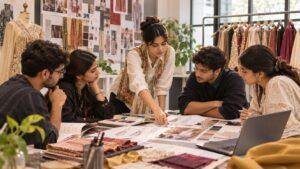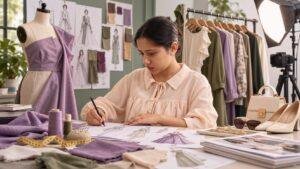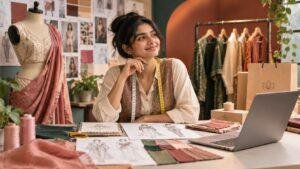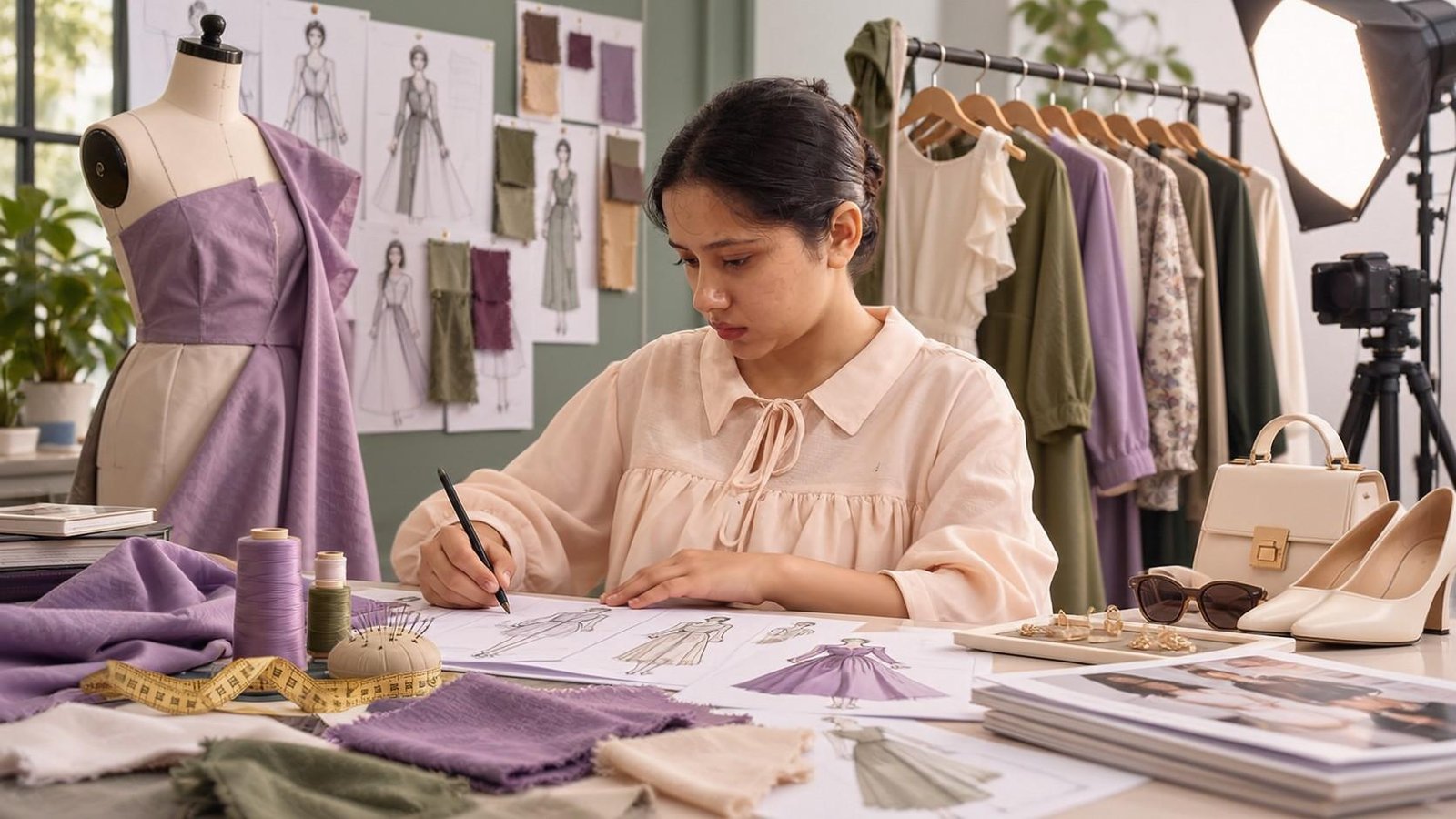
Fashion styling vs fashion design is one of the most common questions students ask when they begin exploring a career in fashion. Both professions sit at the heart of how fashion is created, presented and experienced, but their responsibilities are fundamentally different. Fashion design focuses on developing clothing and fashion products, from initial concept through to finished garment. Fashion styling focuses on assembling and presenting complete looks, communicating a visual identity through the selection and arrangement of clothing, accessories and other elements.
Understanding what each role actually involves, the skills it demands, and the career paths it opens is the most reliable way to decide which direction fits your strengths and interests. For students still weighing their options, the fashion designer vs fashion merchandiser guide and what does a fashion designer do in a fashion house provide useful context on the design side of the industry. If you are exploring entrepreneurial directions after studying design, the how to start a clothing brand guide is worth reading alongside this one.
What Is Fashion Designing?
Fashion designing is the process of developing clothing and fashion products, from the first research stage through to the finished garment. A fashion designer works with trends, fabrics, silhouettes and construction techniques to create clothing that serves a specific customer, market or creative brief.
The work begins with research: studying current trends, identifying emerging themes, analysing consumer preferences and exploring references that inform the design direction. From this research, a designer develops concepts, creates sketches and builds out collections that express a coherent visual and commercial identity. Understanding garment construction, pattern making, fabric behaviour and material selection is central to the role, because a design exists not just as a drawing but as a physical object that must be made, worn and function in the real world. Taking a design from initial concept to finished product involves working with technical drawings, sample development, fabric sourcing and production, requiring both creative skill and technical precision throughout the process.
What Is Fashion Styling?
Fashion styling is the art of creating and presenting complete looks for a specific purpose: a photographic editorial, a film or television production, a commercial campaign, a fashion show, or an individual client’s personal wardrobe. A fashion stylist does not design or construct clothing; instead, they select, arrange and combine existing clothing, accessories, footwear and other elements to create a visual outcome that communicates a particular mood, concept or identity.
The work involves developing looks for a wide range of contexts and clients, from magazine editorials and advertising shoots to celebrity appearances and e-commerce product imagery. Stylists work closely with photographers, models, creative directors, designers and production teams, coordinating all visual elements to achieve the desired result. The creative challenge in fashion styling is not construction but curation and communication: selecting from what exists, understanding how individual elements work together, and translating a brief or concept into a finished visual presentation.
Fashion Styling vs Fashion Design: Key Differences
The table below compares the two careers across the dimensions that matter most when choosing a direction.
Factor | Fashion Styling | Fashion Design |
Core focus | Creating and presenting complete looks | Developing clothing and fashion products |
Primary output | Styled visuals, shoots, looks | Garments, collections, products |
Technical requirements | Visual composition, coordination | Garment construction, pattern making |
Typical collaborators | Photographers, models, creative directors | Manufacturers, production teams, buyers |
Creative process | Curation and selection | Conception and construction |
Work settings | Studios, shoots, sets, freelance | Design studios, fashion houses, factories |
Education emphasis | Visual awareness, trend knowledge, portfolio | Drawing, textiles, construction, design process |
Product ownership | Assembled from existing pieces | Original designed and produced garments |
Client relationship | Direct styling for individuals or brands | Design for buyers, brands, or own label |
Skills Required to Become a Fashion Stylist
Visual Awareness and Fashion Sense
Understanding colours, proportions, silhouettes and how different clothing pieces and accessories work together is the foundational skill of a fashion stylist. This awareness extends beyond personal taste to an understanding of how visual elements interact in a specific context: a colour combination that works in an editorial shoot may not work for a brand campaign or a client’s personal wardrobe. Developing this awareness requires consistent observation of fashion across different formats, media and cultural contexts.
Creativity and Trend Awareness
Developing fresh looks while staying informed about changing fashion styling preferences and industry trends is what keeps a stylist’s work relevant and competitive. Creativity in styling is not about inventing new clothing but about seeing possibilities in existing pieces, combining them in unexpected ways, and translating a brief or concept into a visual outcome that feels current and considered. Trend awareness means understanding not just what is on the runway but what is resonating with specific audiences in specific markets.
Communication and Coordination
Working with clients, models, photographers, designers and production teams requires clear, confident communication at every stage of a project. A stylist must be able to interpret and articulate a creative brief, present their choices persuasively, adapt to feedback in real time, and coordinate logistics across multiple people and elements simultaneously. The ability to manage these relationships professionally is as important to a successful fashion stylist career as the visual skills themselves.
Adaptability and Problem-Solving
Creating suitable looks within different budgets, briefs, locations and time constraints is a practical reality of professional fashion styling work. Clothing goes missing, budgets change, briefs evolve, and shoots do not always go as planned. The ability to find solutions quickly, substitute pieces effectively, and maintain the creative intent of a project under pressure is what separates working stylists from those who struggle in professional environments.
Portfolio Development
Showcasing styling concepts, mood boards, outfit combinations and completed visual projects is how a fashion stylist demonstrates their creative capability to potential clients and employers. A strong styling portfolio communicates visual range, creative thinking and the ability to execute a brief. Building it requires actively seeking opportunities to create styled content, collaborating with photographers and other creatives, and developing work that shows the breadth and quality of your approach.
Skills Required to Become a Fashion Designer
Drawing and Design Development
Translating creative ideas into sketches, technical drawings and design concepts is the visual language of fashion designing. A fashion designer must be able to communicate a garment’s proportions, construction details, fabric choices and finishing through drawing, both for their own development process and for the production teams who will make the garment. This skill is developed through consistent practice across different drawing methods, from loose concept sketches to precise technical flats.
Fabric and Textile Knowledge
Understanding fabric properties, textures, prints and material selection is essential to fashion designing because every design decision is affected by the material in which it will be realised. A silhouette that works in a structured woven fabric behaves entirely differently in a soft knit. A print that reads well at small scale may be overwhelming at full garment scale. Building genuine textile knowledge requires handling materials directly, studying their behaviour, and developing an understanding of how fabric selection affects everything from construction to cost to customer experience.
Garment Construction and Technical Skills
Learning how patterns, measurements, stitching and finishing contribute to a completed garment gives a fashion designer the technical foundation to develop work that is not just visually compelling but actually producible. Understanding construction is what allows a designer to communicate precisely with manufacturers, evaluate samples accurately, and make informed decisions when a design needs to be adapted for production. This is one of the most significant technical distinguishers in fashion design career development: designers who understand construction make better design decisions at every stage.
Research and Concept Development
Using market research, trend analysis and creative inspiration to develop collections is the intellectual process that underlies all good fashion designing. Research gives a collection its context and commercial relevance. It prevents design from becoming arbitrary and connects creative decisions to real customer needs and cultural moments. Developing the habit of thorough, open-ended research before the design process begins is a practice that strengthens with every project.
Practical and Digital Design Skills
Working with design tools and understanding the stages involved in developing a fashion product connects creative thinking to the production realities of the industry. Whether working with physical sampling processes, digital design software, or both, a fashion designer needs practical fluency in the tools and methods their sector uses. These skills are increasingly important as the industry continues to adopt digital workflow tools across the design and production process.
Career Opportunities in Fashion Styling vs Fashion Design
Career Opportunities in Fashion Styling
The fashion styling career path branches across a range of specialisations, each serving different industry contexts. Personal stylists work directly with individual clients to develop and maintain their wardrobe. Editorial stylists create looks for magazine features and fashion editorial photography. Celebrity stylists manage the public image wardrobes of high-profile individuals for events, appearances and media. E-commerce stylists work with brands and platforms to present products attractively for online retail. Commercial and campaign stylists develop looks for advertising and branded content. Wardrobe stylists work in film and television production, while fashion shoot stylists work across a range of photographic contexts. Responsibilities and opportunities vary significantly by experience level, specialisation and employer, with many stylists combining several of these areas across their career.
Career Opportunities in Fashion Design
The fashion designing career opportunities span the full range of contexts in which clothing is designed and produced. Assistant and junior fashion designer jobs in India and internationally provide entry points into the professional industry, with progression into senior design roles over time. Apparel designers work within specific product categories, while textile and print designers focus on the surface and material qualities of fabric. Fashion product developers work between design and production, ensuring that creative intent is achievable within commercial realities. Costume designers work in film, television and theatre. At the entrepreneurial end, the fashion design career can lead to founding an independent clothing label or developing a fashion business. As with styling, the actual responsibilities and growth trajectory vary considerably by experience, specialisation and the kind of organisation or practice a designer builds.
Where Do Fashion Stylists and Fashion Designers Work?
Fashion stylist jobs in India and internationally span a wide range of working environments. Fashion magazines and digital publications commission editorial styling work. Advertising agencies and production companies hire stylists for campaign shoots. Film and entertainment productions employ wardrobe and styling teams. E-commerce companies maintain in-house styling operations for product photography. Fashion brands commission styling for lookbooks, runway presentations and content. Many fashion stylists build independent freelance practices across several of these sectors simultaneously.
Fashion designer jobs in India are concentrated in fashion houses, apparel manufacturers, export companies, design studios, retail brands and independent labels. The garment manufacturing and export sector in India provides significant employment for trained designers, as does the domestic retail fashion industry. Designers also work within film and entertainment, crafts and textile organisations, and fashion media. Those who develop their own labels or practices create their own working context, drawing on the full range of commercial and creative skills their training and experience have built.
Fashion Styling vs Fashion Design: Which Career Should You Choose?
The most useful way to approach this decision is through the kind of work you actually want to do, not the job title or perceived prestige of either option. Both careers involve creativity, research, communication and a genuine understanding of fashion, but the daily reality of each is quite different.
Consider fashion styling if you enjoy putting outfits together, visual storytelling, coordinating looks for a specific context, and working in the collaborative environment of shoots, productions and direct client relationships. The satisfaction in styling comes from the selection and presentation process, from seeing a complete look come together and communicate something precise and compelling.
Consider a fashion designing career if you enjoy sketching, developing garments from scratch, experimenting with fabrics and construction, and understanding how clothing is physically made. The satisfaction in designing comes from the creative and technical process of bringing a new object into existence, from initial concept through to a finished, wearable garment.
Both directions require dedication, industry awareness and a commitment to building professional skills through real experience. The right choice is the one that aligns with the kind of creative work you will invest in consistently over time, not just the one that sounds most appealing in description.
What Should You Study to Build a Career in Fashion?
Structured fashion education gives students a foundation that is genuinely difficult to build any other way, particularly for those interested in fashion designing career opportunities. A well-designed programme develops design fundamentals, garment construction knowledge, textile awareness and research habits across a structured curriculum, alongside practical projects that connect creative thinking to real production contexts.
For students interested in fashion styling, structured learning that develops visual awareness, trend knowledge, styling practice and portfolio building is valuable, particularly when combined with practical experience through internships, collaborative shoots and industry exposure. Understanding design principles, garment construction and how clothing is made gives a stylist a more informed and confident creative eye, regardless of which specific direction they pursue.
The importance of practical projects, design fundamentals and industry awareness applies across both directions. The fashion design eligibility criteria guide gives useful context on the breadth of knowledge and skills a structured programme is designed to develop, and the freelance fashion designer vs full-time job guide provides a practical picture of the career structures available to working designers.
Build Your Fashion Career Foundation with INIFD
INIFD’s fashion design programmes develop the creative, technical and commercial knowledge that students need to build a credible professional practice in the fashion industry. The curriculum builds practical design skills through project work that mirrors real industry processes, from concept development and trend research through to garment construction, collection development and portfolio presentation.
Students develop the kind of design thinking, textile knowledge and technical fluency that makes the transition from education to professional practice as direct as possible. Industry exposure through internships and live project opportunities gives students real context for the design and production processes they study, and portfolio development throughout the programme ensures that graduates have the body of work needed to begin building their careers from a position of genuine capability.
Conclusion: Fashion Styling and Fashion Design as Two Distinct Career Paths
Fashion styling vs fashion design is ultimately a question about the kind of creative work you want to build your career around. Styling centres on creating and presenting looks, coordinating visual elements and communicating a concept through selection and arrangement. Design focuses on developing clothing and fashion products, from initial concept through to finished garment, requiring technical construction knowledge alongside creative and commercial thinking.
Both careers are part of the same industry ecosystem and both require commitment, creative rigour and an understanding of how fashion works as a business and a cultural phenomenon. The right direction depends on the kind of work you are genuinely interested in doing, the skills you want to develop, and the professional practice you want to build over time.
Frequently Asked Questions
No. Fashion styling involves selecting and presenting existing clothing and accessories to create complete looks for shoots, clients or productions. Fashion designing involves developing original clothing and fashion products from concept through to finished garment. The two careers require different skills and involve different daily work, though both require a strong understanding of fashion.
Yes. A fashion designer has strong foundational knowledge of garment construction, fabric and visual composition that translates well into fashion styling. Making the transition typically involves building a styling portfolio, developing experience in styling contexts, and shifting the focus from construction and development to selection and presentation.
Both are creative careers, but they express creativity differently. Fashion styling suits students who enjoy curation, visual storytelling and collaborative set or shoot environments. Fashion designing suits students who enjoy conceiving and constructing original garments. The better fit depends on where your creative interests and practical strengths naturally sit.
Fashion stylists do not need to design or construct clothing, but understanding garment construction, fabric behaviour and design principles gives a stylist a more informed eye. Knowing how a garment is made helps a stylist understand how it will behave, photograph and work with other pieces, which strengthens the quality of their selections.
A working knowledge of fashion styling helps a fashion designer present their work effectively in lookbooks, campaigns and editorial contexts. Designers who understand how to style a look communicate the intended vision of their garments more clearly. While styling is not a core technical requirement of fashion design, it is a useful complementary skill.
No single mandatory qualification exists for fashion stylists in India. However, a formal education in fashion, visual communication or a related field builds the foundational knowledge and industry awareness that professional styling requires. Practical experience through internships, collaborative shoots and portfolio development is at least as important as formal qualifications for building a fashion styling career.
Entry-level positions in fashion styling include styling assistant, wardrobe assistant, e-commerce styling coordinator, and junior editorial assistant roles. These positions develop practical experience in professional styling environments and are the typical starting point for a fashion stylist career in India and internationally.
Yes. Many fashion stylists build independent freelance practices, working across editorial, commercial, celebrity and personal styling contexts. Freelance fashion styling requires building a strong portfolio, developing industry relationships, and managing the business and logistical aspects of independent work alongside the creative practice.
Both fashion styling and fashion designing career opportunities in India are growing, supported by the expansion of domestic fashion retail, e-commerce, digital media, film and advertising. Fashion designer jobs in India are supported by a large garment manufacturing and export sector as well as a growing domestic design industry. Fashion stylist jobs in India have expanded significantly with the growth of e-commerce and digital content. Neither is objectively more opportunity-rich; the right comparison is which sector aligns with your skills and interests.
Yes. The design fundamentals, garment knowledge and visual thinking developed through a fashion design course provide a strong foundation for exploring styling. Many designers develop styling skills and practice as a complement to their design work, and some transition primarily into styling roles over the course of their careers.